
You Are Here: The $40 Trillion Debt Map


Total federal debt crossed $40 trillion last week. Jeremy Showalter maps how we got here, where four institutional projections take it by 2050, and why the honest total is already about $55 trillion.
Total federal debt crossed $40 trillion last week. Jeremy Showalter maps how we got here, where four institutional projections take it by 2050, and why the honest total is already about $55 trillion.
The reckless nature of government fiscal policies suggests a future where financial instability may hinge on the balance between innovation and traditional policy decisions.
Bitcoin can achieve its ultimate goal — to be a neutral base layer of a new monetary system for billions of users worldwide
If Argentina embraces Bitcoin, perhaps it can start to resemble the prosperous nation it once was and its people can finally experience something they haven’t felt in a long time — hope.
As Americans continue to feel misled by their government and struggle with the cost of living, Bitcoin increasingly becomes a viable alternative.
Investors need to consider that we may be entering a period not seen in the developed world in decades, similar only to those experienced in emerging markets.
As economies around the globe grapple with the fragility of their currencies, the rising adoption of Bitcoin signals a collective move towards the hardest money man has ever known.
Bond yields are rising as investors are beginning to question the sustainability of these policies as the budget deficit grows larger and inflation remains elevated.
The history of the Bank of Amsterdam underscores the vital role trust plays within the monetary system today. As more individuals choose Bitcoin over traditional fiat currencies, its adoption and significance will grow.
These are thin markets right now, so when major news hits, expect the volatility to continue. And remember… volatility works both ways!
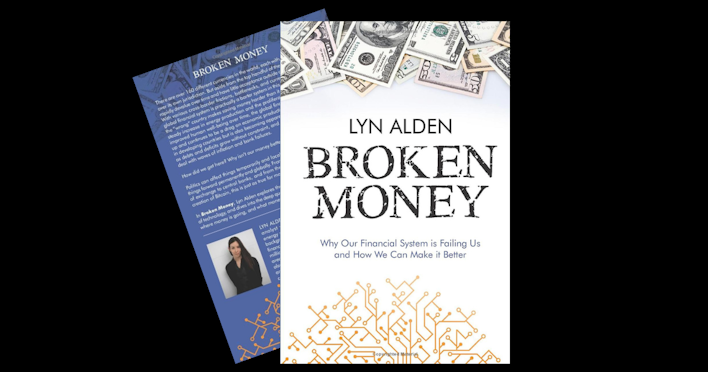
This draws from chapter 8 of Lyn Alden’s new book, Broken Money, and focuses on a key reason why the world became more and more financialized.
In March of 2023, a banking crisis arose as an active threat to depositors of two banks and a potential threat to many.
Price inflation, being a multi-faceted phenomenon, usually has multiple causes at once, and those individual causes become relevant over different time periods.
And why it is in fact the only intellectually and ethically defensible monetary system.
As fiat currencies crash against the USD, it makes sense to start using Bitcoin denominations, even for day-to-day expenses.
Bitcoin and economic growth are the only reasonable ways out of this debt problem.
The Euro was a poorly designed political construct from the beginning, and now we are seeing its vulnerabilities reemerge in a time of crisis. Can it survive?
As the national currency of Turkey continues to plummet, Bitcoin represents an escape hatch for citizens looking to preserve wealth.
Massive government intervention in markets is underway, but what happens to Bitcoin as a result?
Once people realize what’s happening to their money, they will start buying Bitcoin.
We are living in hyperbitcoinization, or the repricing of the world in Bitcoin. Bitcoin is a better store of value than gold. For the same reasons people hold gold, Bitcoin will be valued at least on par with gold.
We’re in the midst of two great economic experiments. The Keynesian ideal of central control of money is being challenged by a novel money called Bitcoin.
Bitcoin’s legal status as commodity money brings to light Gresham’s Law, an economic principle stating “bad money drives out good.” We explore how to apply Gresham’s Law to the Bitcoin Standard.
Bitcoin price predictions for 2026, 2030 and 2040 from Citi, ARK, Standard Chartered, Bernstein and VanEck, plus a scorecard of past forecasts.
In this guide, we examine the Cantillon Effect, answering the question: 'How does Bitcoin act as a counter to uneven inflationary impacts? '
In this guide, we delve into the key differences between Bitcoin & gold, exploring which is a better investment in terms of value, accessibility, security, liquidity.